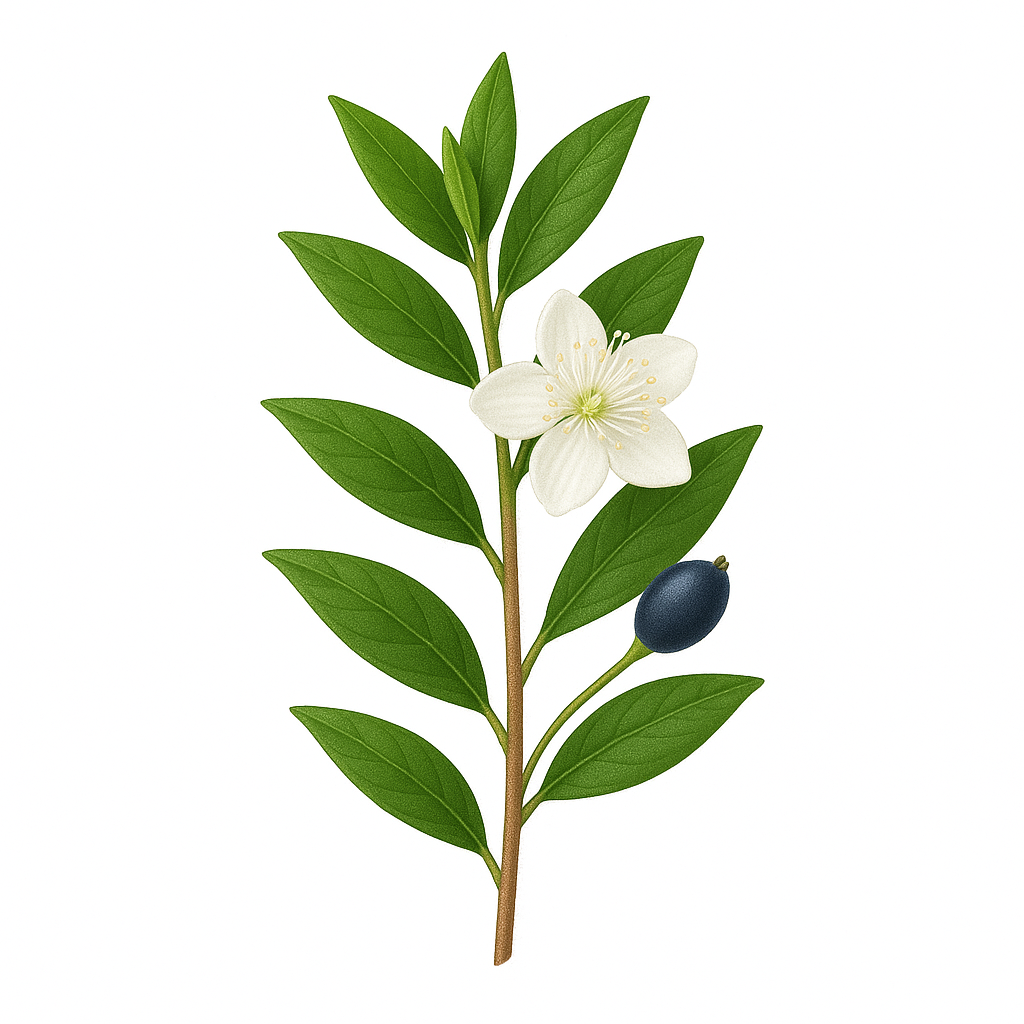
MYRTLE ESSENTIAL OIL
INCI Name :
Myrtus Communis Oil
Indications
Purifying, invigorating, balancing
Applications
Myrtle essential oil is traditionally used for its fresh and pure fragrance, evoking Mediterranean softness. Its composition, rich in monoterpenes and esters, gives it an aromatic profile balancing freshness, resinous sweetness, and light floral tones. It is especially sought after in cosmetic formulations focused on aromatic breathing, skin comfort, and natural hygiene.
Properties (indications)
Information intended for formulators. Not a therapeutic claim for finished products.
- Aromatic purifying
Valued in cleansing care, toning lotions, and hygiene products. - Refreshing and toning
Sensation of purity and fresh breathing in wellness products. - Skin balancing (traditional aromatherapy)
Commonly used in care for combination or shiny skin. - Gentle, soothing scent
Brings a more delicate aromatic dimension than eucalyptus/rosemary cineole types.
Applications
Face & skin care
- Gentle purifying lotions
- Fresh cleansers for combination/oily skin
- Natural toning mists
Body & wellness
- Light oils for the chest
- Aromatic respiratory care (professional use)
- Revitalizing freshness gels
Hygiene
- Natural deodorants
- Aromatic soaps and shower gels
- Plant-based toothpastes and mouthwashes (very low dosage)
Perfumery & spa
- Mediterranean green-aromatic notes
- Purifying spa atmospheres
- Fresh diffusion blends
Formulation integration
- Indicative dosage: 0.1% to 1%
- Recommended carriers: aromatic hydrosols, light oils, water-based gels, cleansing bases
- Aromatic synergies: eucalyptus radiata, ravintsara, fine lavender, rosemary, lemon, Scots pine
Precautions for use
- Recommended use: diluted
- Do not apply near eyes or mucous membranes
- Patch test advised for sensitive skin
- Not recommended for pregnant/breastfeeding women and young children (traditional aromatherapy)
- Keep out of reach of children